Provider review · Updated October 5, 2026
SuperHealthy Rx review: a provider claim is not a copper-cream specification
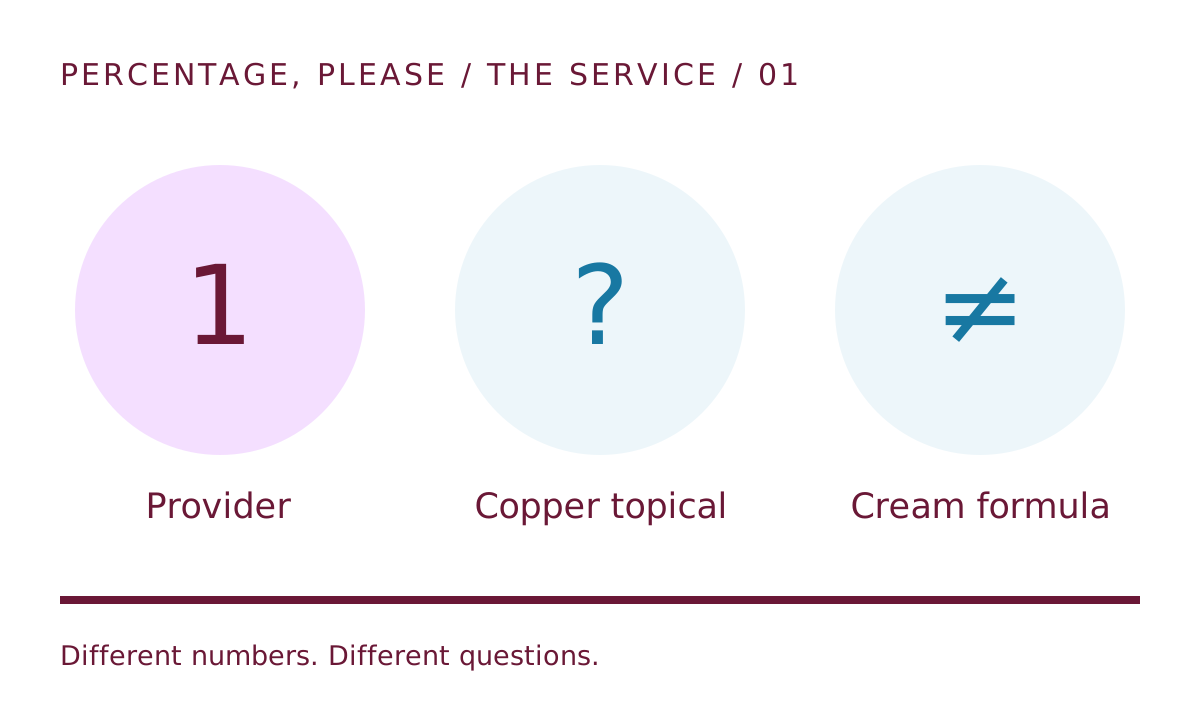
The checked service catalog and weight-care campaign describe a broader provider. They do not establish a copper topical, its ingredients or a skincare price.
Editorial source review, with no clinician sign-off or firsthand treatment experience claimed.
Before asking whether a copper percentage is persuasive, establish whether the provider has actually identified a copper product. SuperHealthy Rx illustrates this earlier question. The public pages inspected for this review describe a range of telehealth services and a weight-care campaign; they do not establish a copper-peptide face cream.
Percentage, Please includes this native provider review so readers can follow the listing to a full explanation. We checked the catalog and linked campaign on October 5, 2026, without making a purchase or submitting health information. The absence of a confirmed topical in those records is part of the review, not a blank to fill with another brand’s formula.
In this article
Identify the subject before comparing its claims
The main catalog presents weight management, NAD+ services, sermorelin and sexual-wellness treatment. This establishes which service categories appear in that public navigation. It does not provide a copper face cream's name, base, concentration, package or topical instructions. Our directory therefore marks the record No topical confirmed rather than assigning it a serum or cream format.
This is a statement about the pages checked, not an assertion that a provider's entire future catalog has been ruled out. A later topical listing would need its own source record. Until then, the question is one of identity: which exact product is being discussed? The CoreAge review and Likeness review concern named cream offers and illustrate the documentation a topical entry would need.
Keep campaign prices attached to the campaign
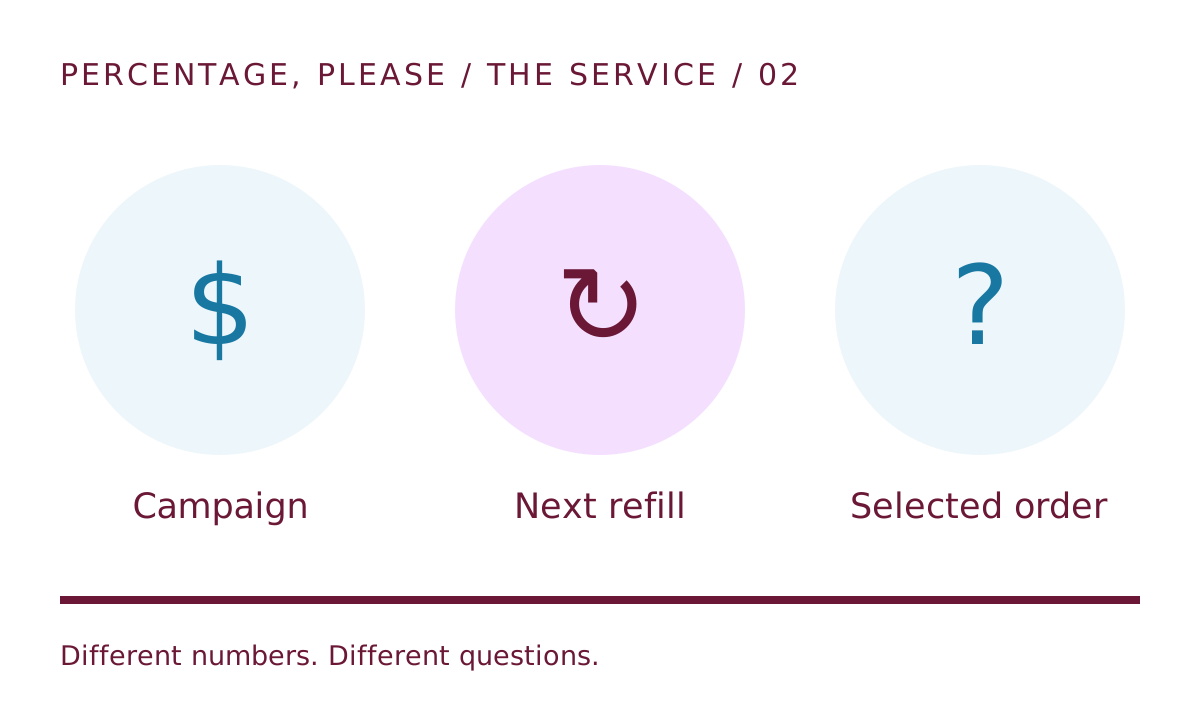
The main site's weight-care display begins at $199 monthly. The separate SuperHealthy campaign advertises $85 monthly semaglutide and $135 monthly tirzepatide, with its own statements about included services. These are different public contexts; a current order summary is needed to determine the actual offer a visitor is selecting. None is a skincare price.
A low monthly figure does not identify a shared quantity or service across unrelated records. Even within a single treatment category, the meaning of the price depends on what the selected plan contains and when payment happens. The price-unit guide examines that reading problem without inventing a topical package, treatment duration or per-gram figure for SuperHealthy.
No membership fee and no automatic refill are different claims
The campaign states that it has no membership fees or contracts. Its refill answer nevertheless describes automatic refills that can be switched off before an order. Those sentences address different features. It would be inaccurate to turn the absence of a membership fee into a promise that every shipment requires a new manual purchase.
We did not enter an account to test the refill control or a cancellation. Before relying on the wording, identify the current order status, when another charge is scheduled and where changes take effect. The Likeness subscription discussion is a useful separate example of a stated recurring interval. It does not establish the same timing, fees or control process for SuperHealthy.
A service description does not complete a clinical evaluation
SuperHealthy describes remote assessment, medical review and medication delivery when prescribed. Some situations may involve a live consultation according to its catalog. This review has not verified a specific clinician, a reader's state eligibility, a dispensing assignment or an observed response time. Those matters cannot be settled merely by the provider's position in a publication's list.
When an offer concerns a compounded medicine, the FDA explanation supplies an additional boundary: the finished drug has not gone through FDA approval. A statement about licensed professionals or pharmacy services does not change that distinction. The appropriate clinical decision must concern the actual proposed treatment and person, rather than treating a general telehealth description as approval to begin care.
Do not transfer an outcome between products
The weight-care campaign includes outcome language and testimonials. This publication has not authenticated those experiences, audited the underlying reports or measured a provider-specific result. More fundamentally, a weight-care outcome would not answer whether an unidentified topical changes facial firmness. Matching the advertised service and the claimed endpoint is necessary before discussing the strength of its support.
The study-endpoint guide describes how even a single study can produce different findings for different assessments. That reading principle does not turn medication research into a face-cream trial. The fact that two services discuss appearance, aging or wellbeing is not enough to combine their evidence or supply a missing product record.
What makes this provider file useful to a skincare reader
Its value is in making the category boundary explicit. The service can remain visible in the featured provider order while the full product index identifies actual creams, serums and broader peptide comparators. For a product with a public cosmetic formula, consult The Ordinary review; for a specified provider cream, inspect the separate CoreAge and Likeness files.
Try Spot the Leap to practice matching a claim with the observation needed to support it. Readers interested in the different weight-care service can open the SuperHealthy campaign. That external page's terms govern the offer. This review supplies neither a copper formula nor a personal recommendation for one of its medications.
Sources behind this reading
- SuperHealthy Rx — service catalog ↗Provider catalog · Checked October 5, 2026
- SuperHealthy Rx — weight-care campaign ↗Provider campaign and refill claims · Checked October 5, 2026
- FDA — Understanding the risks of compounded drugs ↗Regulatory explanation · Checked October 5, 2026