Product review · Updated October 13, 2026
Solvéa Copper Peptide Serum review: named GHK-Cu, unanswered quantities
A reading of the $27.99 serum, ingredient-versus-product evidence and conflicting 60-day and 30-day refund wording.
Editorial source review, with no clinician sign-off or firsthand treatment experience claimed.
Solvéa’s Copper Peptide Serum names Copper Tripeptide-1, also described as GHK-Cu, alongside bakuchiol and supporting cosmetic ingredients. The checked product offer lists $27.99. The page’s strong language about collagen, skin renewal and retinol-like results requires a separate question: which claims have been established for this exact finished serum?
We reviewed the official offer and refund policy on October 13, 2026 without using the product or placing an order. The main findings are a named copper ingredient without a disclosed copper percentage, general ingredient evidence presented within a product sales story, and refund pages that do not agree on the trial conditions.
In this article
An ingredient name is useful but the formulation remains incomplete
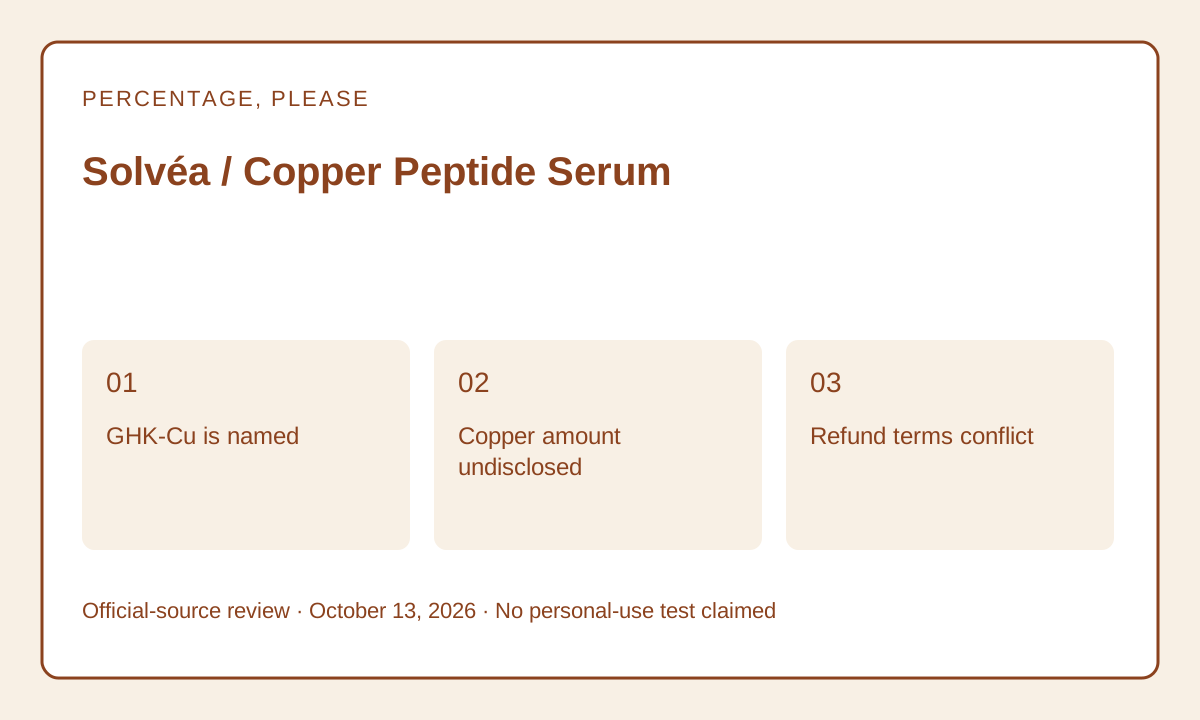
The page specifically identifies Copper Tripeptide-1 and GHK-Cu. That is more precise than a generic reference to copper peptides, but the reviewed text does not disclose a copper-peptide percentage or a complete analytical specification. We cannot infer the active amount from a blue appearance, the word concentrated or a list of proposed biological actions.
The seller also highlights bakuchiol, niacinamide, adenosine and a hyaluronic-acid complex. A niacinamide range in the narrative should not become a copper concentration. Nor does a list of highlighted materials establish every preservative, botanical or other constituent. Ask for the current full ingredient declaration if a known sensitivity or exact material identity affects the decision.
Bakuchiol evidence cannot stand in for a finished-serum trial
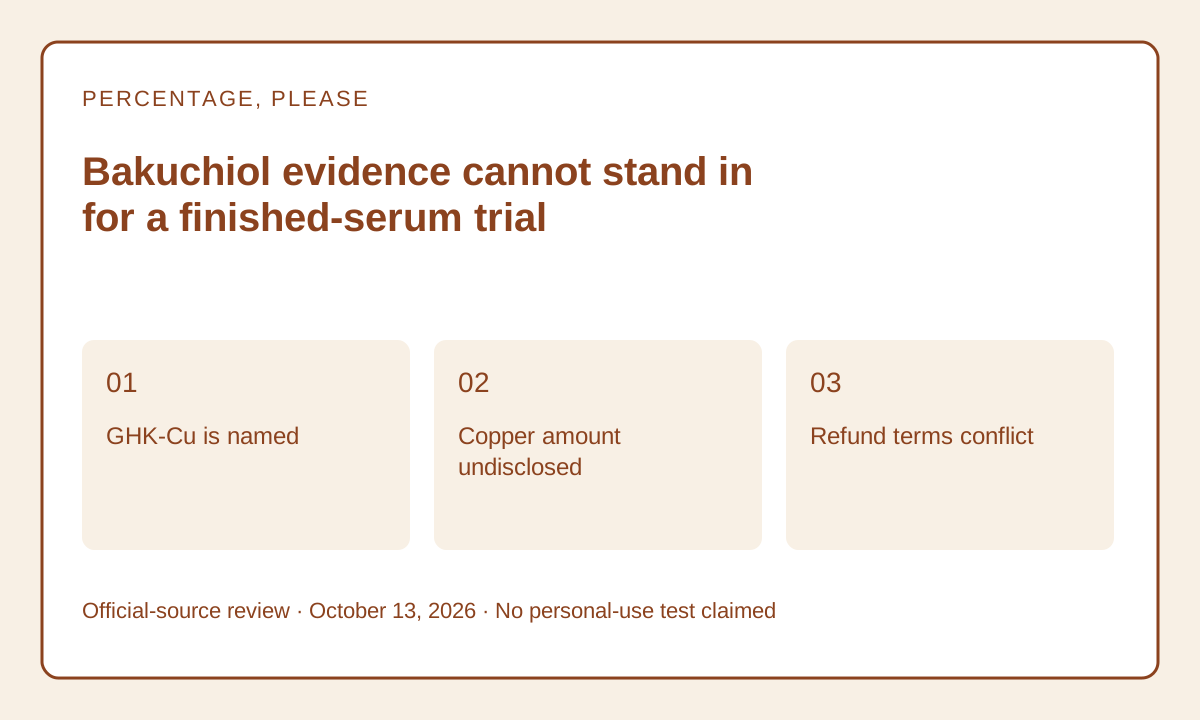
Solvéa invokes studies of bakuchiol and retinol-like cosmetic results while describing the serum. Those statements do not identify a controlled comparison of this particular formula against a retinol product. The checked offer does not supply enough complete methods to assess product-specific allocation, comparator, outcome measurement and analysis.
The study-endpoint review shows why the tested preparation and setting matter. An ingredient can have interesting research without every product containing it inheriting the same result. We therefore do not repeat the sales page’s equivalence or no-irritation language as an independently verified conclusion about Solvéa.
Multiple timelines should not become a promised result date
The page uses several time frames for glow, texture and wrinkles, including an eight-week headline and discussion of results over a longer period. Those may refer to different endpoints or ingredient studies. They do not establish a single guaranteed time at which an individual purchaser will see meaningful improvement.
The seller-hosted testimonials describe favorable experiences, but we did not authenticate their selection, representativeness or attribution. They are not a substitute for an outcome distribution that includes people who improved little or stopped because of discomfort. Hydration, perceived firmness and measured wrinkles should stay separate when deciding what a product would need to accomplish.
Directions do not settle every combination question
Solvéa suggests a few drops after cleansing and toning, followed by other routine steps, and includes its own advice about separating high-concentration vitamin C. We report that as seller guidance. It is not evidence of a universal incompatibility rule covering every copper formula, vitamin C derivative, concentration and vehicle.
A reader with an established prescription or irritated skin should review the exact products and directions rather than add a broad compatibility rule from an advertisement. The AAD’s guidance on testing new skincare products supports a cautious introduction, but a small-area check cannot verify effectiveness or guarantee that the full routine will remain comfortable.
The two refund descriptions leave a material question
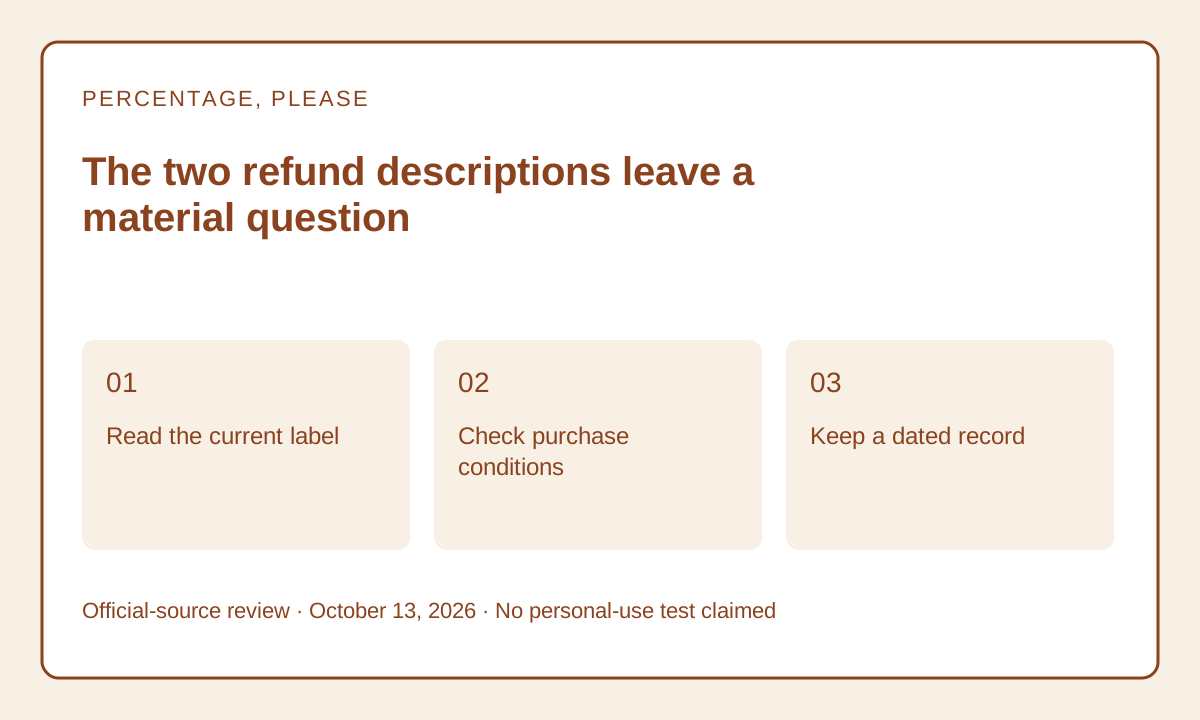
The serum page advertises a 60-day satisfaction refund from purchase and directs customers to a support address. The written refund policy instead describes a 30-day window after receipt for unused goods in original condition. It also lists personal-care beauty products among exceptions and excludes sale items, which complicates reliance on a discounted serum offer.
These are separate published descriptions, not a confirmed account of how a claim is handled. The policy requires return authorization and says unsolicited returns are not accepted. Ask the seller to confirm in writing whether an opened serum bought at the displayed sale price qualifies for the 60-day promise, including any shipping or return requirements.
Compare the order and the evidence on their own terms
The captured product record contains the $27.99 one-time price and a lower selling-plan allocation. That does not establish what a buyer will select or the recurring interval shown at checkout. Check purchase type, quantity and the next charge instead of treating the lowest displayed figure as the total cost of a one-off trial.
This serum offers a recognizably named copper ingredient and an accessible advertised entry price. The limits are incomplete formula quantities, weakly specified finished-product evidence and unresolved return eligibility. The grade-and-purity guide and source comparison provide a way to compare those disclosures without assuming that a stronger sales claim means a stronger clinical result.
Sources behind this reading
- Copper Peptide Serum – Solvéa ↗Official public source · Checked October 13, 2026
- Refund policy – Solvéa ↗Official public source · Checked October 13, 2026
- How to test skin care products ↗Official public source · Checked October 13, 2026